


In a world where technology and nature often seem at odds, a surprising synergy is emerging—Global Positioning Systems (GPS) are helping us reconnect with the natural world in ways we never imagined. While GPS is typically associated with navigation and logistics, its applications now extend far beyond maps and directions. From enhancing indoor experiences to revolutionizing environmental education and conservation, GPS is becoming a powerful tool for bringing the outdoors in.
Let’s explore how GPS technology is fast-tracking our ability to experience, understand, and interact with nature, without ever stepping outside.
🛰️ What Is GPS and How Does It Work?
The Global Positioning System (GPS) is a satellite-based navigation system that provides real-time location, velocity, and time data anywhere on Earth. It operates through a constellation of at least 24 satellites orbiting the planet, constantly transmitting signals to GPS receivers on the ground.
These receivers—found in smartphones, vehicles, drones, and even wearable devices—use a process called trilateration to determine your exact position by calculating the distance from multiple satellites. The result? Pinpoint accuracy that enables everything from turn-by-turn directions to wildlife tracking.
🌿 The Unexpected Connection: GPS and Nature
So, how does a high-tech satellite system help us bring nature indoors? The answer lies in data, visualization, and interaction. GPS enables us to capture, map, and simulate natural environments in ways that are immersive, educational, and even therapeutic.
Here are some of the most exciting ways GPS is bridging the gap between the digital and natural worlds:
🧭 1. Virtual Nature Walks and Indoor Exploration
Thanks to GPS-enabled mapping and augmented reality (AR), you can now take a virtual hike through a rainforest, explore a coral reef, or wander through a national park—all from your living room. Apps like Google Earth, Gaia GPS, and AllTrails use GPS data to recreate real-world trails and landscapes in stunning detail.
These experiences are especially valuable for:
Urban dwellers with limited access to green spaces
Elderly or mobility-impaired individuals
Educators looking to bring geography and ecology lessons to life
By combining GPS data with 3D modeling and AR, we can simulate the sights, sounds, and even the topography of natural environments indoors.
🌱 2. Smart Indoor Gardening and Environmental Monitoring
Indoor gardening has gone high-tech. GPS-enabled sensors and smart gardening systems now allow you to simulate outdoor growing conditions inside your home. These systems monitor:
Light exposure
Humidity and temperature
Soil moisture and nutrient levels
Some advanced setups even use GPS data to sync with local weather patterns, adjusting indoor conditions to mimic seasonal changes. This creates a more natural growing environment for plants and a more engaging experience for gardeners.
🐾 3. Wildlife Tracking and Conservation Education
Organizations around the world use GPS to track the movements of endangered species, migratory birds, and marine life. This data is often made available to the public through interactive dashboards and apps, allowing users to:
Follow the journey of a tagged sea turtle
Monitor the migration of monarch butterflies
Learn about animal behavior and habitats
By visualizing this data indoors—on a tablet, smartboard, or even a home projector—families and classrooms can engage with wildlife in real time, fostering a deeper appreciation for biodiversity and conservation.
🧘♀️ 4. Mindfulness and Nature Therapy at Home
Nature has a profound effect on mental health, but not everyone has access to green spaces. GPS-powered apps now offer guided nature meditations that use real-world locations and sounds to create immersive, calming experiences.
Imagine sitting in your living room while listening to the ambient sounds of a forest in Oregon or waves crashing on a beach in Bali—complete with GPS-synced visuals and environmental data. These experiences can:
Reduce stress and anxiety
Improve focus and sleep
Enhance overall well-being
It’s a digital form of ecotherapy, made possible by GPS and satellite imagery.
🧑🏫 5. Educational Tools for Geography and Earth Science
GPS is transforming how we teach and learn about the planet. Interactive globes, smart maps, and educational apps use GPS data to help students:
Understand tectonic plate movement
Track weather systems and climate change
Explore ecosystems and biomes
These tools bring abstract concepts to life, making geography and environmental science more engaging and accessible. And because they’re based on real-time data, they offer a dynamic learning experience that evolves with the world.
🏡 6. Indoor Navigation and Smart Home Integration
GPS isn’t just for the great outdoors. Indoor positioning systems (IPS), which use a combination of GPS, Wi-Fi, and Bluetooth, are now being used to:
Navigate large indoor spaces like malls, airports, and museums
Control smart home devices based on your location within the house
Enhance accessibility for visually impaired individuals
By integrating GPS with smart home ecosystems, we can create more intuitive, responsive environments that adapt to our needs, bringing a layer of natural intelligence indoors.
📈 The Business Case: Why GPS Is a Smart Investment
For entrepreneurs and innovators, GPS offers a wealth of opportunities to create products and services that blend technology with nature. Some promising areas include:
Eco-tourism platforms that offer virtual travel experiences
Smart agriculture tools for indoor and urban farming
Educational kits that combine GPS data with AR for schools
Wellness apps that use GPS to deliver personalized nature therapy
As consumers become more environmentally conscious and tech-savvy, solutions that bring nature indoors—powered by GPS—are poised for growth.
GPS Garmin inReach Explorer+
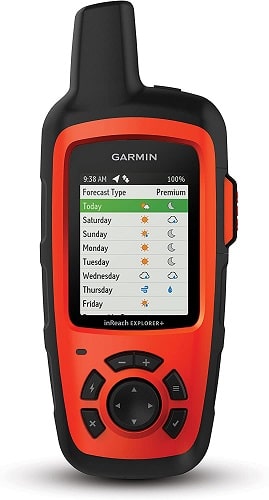
- Preloaded Garmin TOPO mapping with direct-to-device Birdseye satellite imagery downloads (no annual subscription), includes multiple global navigation satellite systems (GNSS) support and navigation sensors
- GPS Cellular connectivity allows you to access weather forecasts and geocaching live
- Compatible with the Garmin Explore website and app to assist you to manage waypoints, routes, activities, and collections, use tracks and review trip data from the sector Internal, rechargeable lithium battery provides up to 35 hours of battery life in 10-minute tracking mode and 1-minute tracking mode (display off), 200 hours in Expedition mode with 30-minute tracking
- Notice: Some jurisdictions regulate or prohibit the utilization of satellite communications devices. It’s the responsibility of the user to understand and follow all applicable laws within the jurisdictions where the device is meant to be used
Global Positioning with GPS Systems
GPS technology is a navigation system that utilizes radio waves to calculate exact land, sea, or air positions anywhere in the world.
The Global Positioning System operates via 24 satellites, which are monitored daily by their ground stations.
There are five basic steps to the operation of GPS, which are:
- Triangulation
- Measure Distance
- Accurate Timing
- Satellite Positions
- Checking Errors
Triangulation is the means by which the GPS receiver measures exact distance via traveling radio waves.
It does this through the utilization of three to four satellites, which broadcast their exact positions. Finally, the GPS receiver calculates the difference in measurement to complete the process of triangulation.
Measurements are based on the time it takes for the GPS radio wave to propagate. Accurate measurement of the distance to the satellite can then be calculated.
Pseudo-random codes have been generated as the GPS language of measurement. Once the GPS receiver multiples the travel time by the speed of light, it provides accurate distance measurements.
Due to the importance of getting accurate timing, ground stations monitor satellites daily. New orbit positions are broadcast twice a day by the Department of Defense.
Areas of error in the GPS system are constantly being factored into the navigation tools.
GPS Garmin Montana 680t
Handheld GPS/GLONASS and Preloaded TOPO Maps
- PRELOADED GEOCACHES – 250,000 preloaded worldwide geocaches from Geocaching.com
- SEE YOUR SURROUNDINGS – Includes a 1-year Birdseye Satellite Imagery subscription
- GPS AND GLONASS – With its high-sensitivity, WAAS-enabled GPS receiver, Hotfix satellite prediction, and GLONASS support, Montana locates your position quickly and precisely and maintains its location even in heavy cover and deep canyons
- TRACK MANAGER – Ability to arrange and navigate through waypoints/routes/track logs (easily start/stop recording tracklogs)
- CAPTURE the instant – 8-megapixel camera for higher quality images and better resolution; geotagged with coordinates automatically.
Advanced Navigation GPS Tracker System
From the very early days of sophisticated society, navigation has been of importance.
Finding position points on the earth with the help of the stars has evolved naturally over the centuries into the new technologies we see today, like GPS.
GPS is just an easier and faster way to navigate and locate all the things we have always done by hand.
GPS Global Positioning System
Finding out where you are on the planet is critical to so many functions of today’s society, including:
- Military
- Farming
- Maps & Routes
- Telecommunications and SIG (System Information Geographic)
- Tracking Transportation
GPS was created for the U.S military, allowing them to track flight planes, lost sea vessels, and military movement.
Ecology is easily tracked with the use of GPS Positioning technology. For instance, civilian pilots of farmland can be navigated for crop-dusting, surveying, and aerial photography.
Imagine the time that can be saved in the car by zeroing in on an accurate destination point and having the route outlined for you.
Trucking GPS Services and Cars
Emergency vehicles, trucking services, and cars can all benefit from the mapping systems of GPS. This also includes tracking transportation and shipping of major exporting companies.
Another great benefit of the GPS is its role in advancing telecommunications. The synchronization of digital networks can be enhanced with this accurate technology.
Measuring and monitoring the Earth for earthquakes and forest fires can greatly aid in maintaining and controlling natural disasters.
GPS Global Positioning System Software and Applications
While the GPS contributes to the function of our society as a whole, it also has some practical, everyday uses.
New integrated circuit technology has allowed GPS receivers to become portable and economical. Most consumer GPS receivers can be installed on your radio, computer, laptop, cell phone, or come as handheld GPS devices.
Using GPS receivers in your car, boat, plane, machinery, or equipment is handy. Here’s a look at some smart ways to use GPS systems daily:
- Outdoors –hiking & camping
- Athletics –training & recording
- Vehicles –tracking & navigating
| Image | Product | Price |
|---|---|---|
| GPS Garmin inReach Explorer+Best Deal
| Price |
 | GPS Garmin Montana 680tTop Deal
| Price |
 | Garmin GPS MAP 66sGreat For Professionnel
| Price |
You can find handheld GPS devices in many lightweight forms, from waterproof receivers for the outdoors to wrist receivers for the serious jogger. You can get your GPS in one compact form.
Don’t forget that navigation in your car can be simple with mapping and route design GPS systems. Radio waves can be downloaded directly into your radio, PC, laptop, or cell phone with miniature GPS receivers.
🌐 Final Thoughts: A New Way to Connect With the Earth
Global Positioning Systems have come a long way from their military origins. Today, they’re helping us reimagine our relationship with nature, making it more accessible, interactive, and meaningful—even when we’re indoors.
Whether you’re a teacher, a tech enthusiast, a wellness seeker, or a curious explorer, GPS offers a fast track to the natural world—no hiking boots required.
So the next time you check your location on a map or follow a virtual trail, remember: you’re not just navigating space—you’re bridging the gap between the digital and the natural, one satellite signal at a time.


