

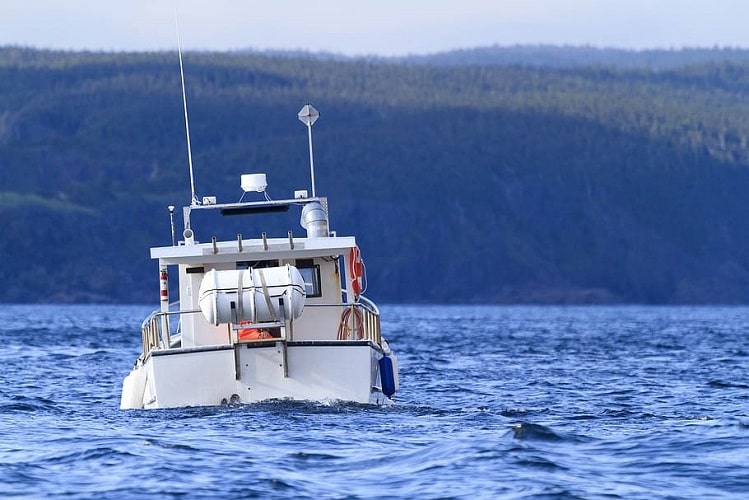
In a world increasingly shaped by digital transformation and environmental awareness, the phrase “bringing nature indoors” has evolved beyond potted plants and biophilic design. For businesses operating in maritime industries—or even those adjacent to them—marine GPS systems represent a powerful way to integrate nature’s vastness into operational strategy. These systems don’t just help vessels navigate the open seas; they offer a compelling business case for efficiency, safety, sustainability, and long-term profitability.
Let’s dive into why investing in marine GPS systems is not only smart but essential for forward-thinking businesses.
🧭 What Are Marine GPS Systems?
Marine GPS (Global Positioning System) systems are specialized navigation tools designed for use on water. They utilize satellite signals to provide real-time location data, route planning, and environmental awareness for vessels of all sizes—from fishing boats and cargo ships to luxury yachts and research vessels.

Modern marine GPS systems often integrate with other technologies like:
Sonar and fish finders
Electronic Chart Display and Information Systems (ECDIS)
Automatic Identification Systems (AIS)
Weather overlays and radar
These integrations turn a simple GPS into a multi-functional marine intelligence hub.
💼 The Business Case: Why It’s a Smart Investment
1. Operational Efficiency and Cost Savings
Fuel is one of the largest expenses in maritime operations. Marine GPS systems help optimize routes, reduce idle time, and avoid unnecessary detours. This translates into:
Lower fuel consumption
Reduced engine wear and maintenance costs
Faster delivery times
For commercial shipping companies, even a 5–10% improvement in route efficiency can result in thousands of dollars saved per voyage.
2. Enhanced Safety and Risk Mitigation
The ocean is unpredictable. From sudden storms to hidden reefs, the risks are real. Marine GPS systems provide:
Real-time hazard alerts
Collision avoidance through AIS
Accurate depth and terrain mapping
This not only protects crew and cargo but also reduces the risk of costly insurance claims, legal liabilities, and environmental damage.
3. Regulatory Compliance
Governments and international bodies like the IMO (International Maritime Organization) are tightening regulations around maritime safety and environmental impact. Many of these regulations require:
Accurate tracking and reporting
Use of certified navigation systems
Emergency response capabilities
Marine GPS systems help businesses stay compliant and avoid hefty fines or operational shutdowns.
4. Data-Driven Decision Making
Today’s marine GPS systems collect and store vast amounts of data. Businesses can analyze this data to:
Identify performance trends
Predict maintenance needs
Optimize crew schedules
Improve customer service with real-time tracking
This level of insight transforms marine operations from reactive to proactive and strategic.
🌍 Bringing Nature Indoors—Digitally
While marine GPS systems operate in the vastness of the ocean, their impact is felt indoors—in control rooms, offices, and even mobile apps. Here’s how they bring nature indoors in a meaningful way:
• Remote Monitoring
Fleet managers and business owners can monitor vessel locations, weather conditions, and performance metrics from anywhere. This digital window into the natural world enhances decision-making and fosters a deeper connection to operations at sea.
• Training and Simulation
Marine GPS data is used in simulators to train new crew members in realistic, nature-based scenarios—without ever leaving the classroom. This reduces onboarding time and improves safety outcomes.
• Environmental Stewardship
By optimizing routes and reducing emissions, marine GPS systems help businesses minimize their environmental footprint. This aligns with growing consumer and investor demand for sustainable practices.
📈 Market Growth and Trends
The marine GPS equipment market is booming. As of 2025, it’s valued at approximately $2.5 billion and is projected to reach $4.0 billion by 2033, growing at a CAGR of 5.5%. Key drivers include:
Rising global maritime trade
Increased demand for recreational boating
Technological advancements in GPS and sonar
Regulatory mandates for safety and tracking
The Asia-Pacific region is expected to see the fastest growth, driven by expanding maritime infrastructure and shipping activity.
🛠️ Types of Marine GPS Systems
Depending on your business needs, there are several types of marine GPS systems to consider:
| Type | Best For | Key Features |
|---|---|---|
| Handheld GPS | Small boats, kayaks, and personal use | Portable, waterproof, basic navigation |
| In-Dash GPS Systems | Commercial vessels, yachts | Integrated with sonar, radar, and chartplotters |
| Chartplotters | Fishing, shipping, and research vessels | Real-time mapping, route planning, and sonar overlay |
| GPS Fishfinders | Commercial and recreational fishing | Combines GPS with sonar to locate fish |
Each system offers unique advantages, and many businesses opt for hybrid solutions that combine multiple functionalities.
🧠 Smart Features to Look For
When choosing a marine GPS, consider these smart features:
CHIRP sonar for high-resolution underwater imaging
Touchscreen interfaces for ease of use
Wi-Fi and Bluetooth connectivity for data sharing
Custom waypoint marking for repeat routes
Weather overlays for real-time storm tracking
These features not only enhance navigation but also improve the overall user experience, making operations smoother and more intuitive.
💡 Real-World Applications
• Shipping and Logistics
Marine GPS systems help shipping companies track cargo in real time, optimize delivery routes, and reduce fuel costs. This improves customer satisfaction and boosts profit margins.
• Fishing Industry
Commercial fishers use GPS-integrated sonar to locate fish populations, avoid overfished areas, and comply with sustainability regulations.
• Tourism and Recreation
Yacht charters and eco-tourism operators use marine GPS to ensure safe, scenic routes and enhance guest experiences with real-time location sharing.
• Emergency Services
Coast guards and rescue teams rely on GPS for rapid response, search-and-rescue missions, and disaster relief coordination.
Professional tips on how to use GPS receivers for sea navigation and celestial navigation. Now you will be able to maximize your fishing, shipping, or travel time with GPS receivers.
Compare prices from the top marine GPS receivers, like Lowrance, Garmin, and Magellan.
Keep reading for a closer look at the benefits and features of marine GPS equipment.
Marine GPS Systems
The Global Positioning System is an ideal tool for your boat trip, whether it’s a simple ride during the day or heavy-duty navigation.
Personal and commercial boat owners can benefit from utilizing a savvy, high-tech navigation system like marine GPS.
If it’s good enough for the U.S. Army, it will surely help you find your way across the ocean as well.
Marine GPS devices work by retrieving position and location information via three to four satellites.
So, whether you’re riding down waterways, lakes, or oceans, a marine GPS will help you navigate through even the roughest water obstructions.
Best GPS Fishfinder with Chirp Traditional Transducer
GPS Garmin 010-01550-00 Striker 4 with Transducer
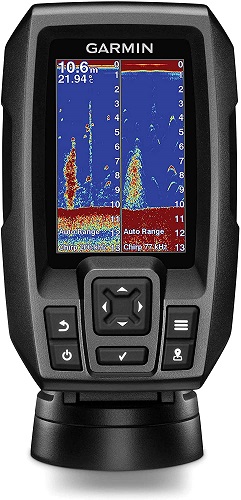
GPS Fishfinder with Chirp Traditional Transducer
- The power of straightforward offers a keyed interface with dedicated buttons; The device is straightforward to use and straightforward to install; Available in 3.5, 5, and 7-inch display sizes; Water rating IPX7
- Chirp Sonar sends an endless sweep of frequencies, which provides a broader range of information; Chirp Sonar is in a position to make crisper fish arches with better target separation
- Built-in flasher: View your sonar data within the classic flasher; ideal for ice fishing or vertical jigging. Display size: 1.9 x 2.9 inches (4.9 x 7.3 centimeter); 3.5 inches diagonal (8.7 centimeter)
Main Features of GPS Marine Navigation
Look online for your ocean GPS navigation system, which comes in models that mount onto your boat or lightweight hand-held GPS receivers.
With your marine GPS receiver, you will find four key features to help you navigate successfully over water, including:
- Sonar
- Display
- Mapping
- Recording
Sonar or sounder radar is a very important tool to understand the state of your current location conditions.
A sea GPS will come with dual-frequency selectivity, with up to 1,000 watts of RMS power. This will help you discover the depth range of your water route, surpassing 3,000 feet.
Understanding the display devices of your GPS receiver is pertinent to correct navigation. Split screens are great options for watching GPS and sonar readings at the same time.
Liquid crystal displays will offer you high pixel resolution and intricately vibrant displays with attention to detail.
GPS mapping systems are state-of-the-art tools that no boater should go without. If you’re shipping large cargo, it’s an absolute must-have.
For top-quality that can’t be beat, look for a real-time mapping system with 12-parallel channel reception with 1,000 waypoints, event markers, and routes.
You can even zoom in on specific points of interest from 0.1 -4, 000 miles.
Don’t forget that you can download many different water maps into your GPS receiver to display at any time.
Garmin Striker Plus 4 GPS Fishfinder

STRIKER Plus 4 Fishfinder With a Bright 4.3”
- Includes dual-beam transducer with Garmin Chirp traditional sonar for crystal-clear images and memorable target separation
- Built-in GPS allows you to mark waypoints, create routes, and consider the boat’s speed
- Bright, Sunlight-readable 4.3” display and intuitive interface
- Built-in Garmin quickdraw contours mapping software allows you to make and store maps with 1’ contours for up to 2 million acres
- Rugged design for every fishing environment.
- Frequencies: Traditional: 50/77/83/200 kHz, Transmit power: 200 W (RMS)
Marine Navigation GPS System Types
Map out and plan your water route before your journey with the vast navigation options of a GPS.
You can use CD-ROM information to search the waterways in detail by uploading maps onto your PC or laptop computer.
Figure out how long it will take you to get from point A to B at a specific boat speed when you use a GPS.
Satellite information will provide you with real-time altitude, heading, and bearing within minutes on your GPS display.
With so many benefits of a GPS, you may have trouble selecting the right one for your boat.
GPS Garmin Striker 4cv Fishfinder with CHIRP Traditional
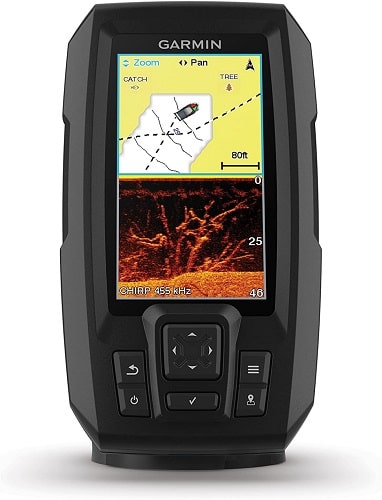
GPS Fishfinder with CHIRP Traditional
- CHIRP traditional sonar plus CHIRP ClearVü scanning sonar, includes transducer for inbuilt Garmin CHIRP traditional
- Built-in Garmin GPS Contours mapping software allows you to create and store maps with 1’ contours for up to 2 million acres
- Built-in GPS allows you to mark waypoints, create routes, and consider the boat’s speed
- Bright, sunlight-readable 4.3” display and intuitive interface
- Rugged design for each fishing environment. Transmit power:300 W (RMS)
Let’s take a look at the different kinds of marine GPS systems and their abilities:
- FishFinders
- Chartplotters
- GPS Sounders
Chartplotters are one of the most popular and well-used navigation systems for oceans and lakes.
This plug-in and display receiver will give you instant access to GPS, including information on weather, sonar, radar, and more.
Now you can get real-time graphical weather data without the need for a separate PC interface. This means that you can avoid rough waters and re-route when necessary.
Sonar data is provided through a black-box sounder and is compatible with new marine radar for a multi-dimensional look at your course.
Use a Chartplotter to find details on coastlines, waypoints, and reversible routes. An automatic GPS tracker will provide stored data on where you’ve been.
Voice-activated prompts will alert you to course speed, arrival, off-course, shallow and deep water areas, as well as anchor drag alerts.
The best part about GPS sounders is that they integrate chartplotting and sonar for a compact sea navigation system.
The intense sonar capabilities of the GPS sounder are especially beneficial for fishermen, as fish can be located within seconds.
Specific features of the GPS sounder include the ability to identify fish by size, utilize depth alarms, and log the temperature in any water zone.
Coming complete with a worldwide marine base map, the sounder provides explorers with depth contours, intertidal zones, wrecks, and navaid locations.
Fishing With GPS Fishfinder
For a special focus on fish, you need to check out the many benefits of the GPS fishfinder.
High-performance, dual-frequency sonar makes for abundant fishing in both salt and freshwaters. Or you can try a single-frequency receiver for shallow lakes and bays.
Keep reading this great online guide to GPS receivers, or go directly to our online buyer’s guide for up-to-date information on the best marine GPS deals and discounts.
Best Handheld Marine GPS Comparison Table
| Image | Product | Price |
|---|---|---|
| GPS Garmin 010-01550-00 Striker 4 with TransducerAmazon Choice
| Price |
| Garmin Striker Plus 4 GPS FishfinderBest Offer
| Price |
| GPS Garmin Striker 4cv Fishfinder with CHIRP TraditionalBest Deal
| Price |
 | Humminbird Fish Finder Helix 7ductAmazon Choice
| PriceRead our Review |
🧭 Final Thoughts: A Smart Investment for a Connected Future
Marine GPS systems are more than just navigation tools—they’re strategic assets that connect businesses to the natural world in real time. They enhance safety, reduce costs, support sustainability, and unlock new levels of operational intelligence.
In a time when digital transformation and environmental responsibility are top priorities, investing in marine GPS systems is a smart move for any business that operates on—or is inspired by—the water.
So whether you’re managing a fleet, running a fishing operation, or exploring new maritime ventures, remember: the smartest way to bring nature indoors might just be through a satellite signal.


