

GIS and IoT: The Smart Integration Powering North America’s Connected Future
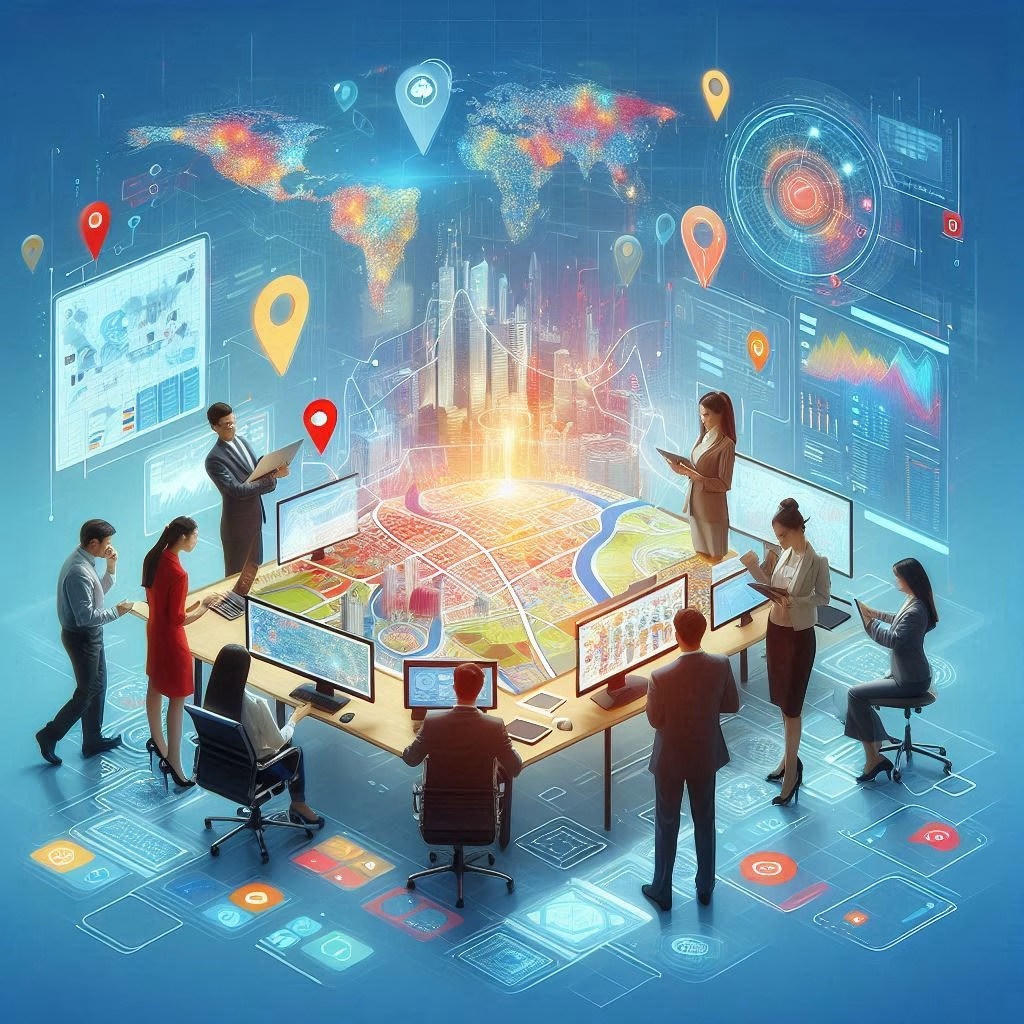
In a world increasingly shaped by data, the fusion of Geographic Information Systems (GIS) and the Internet of Things (IoT) is redefining how we interact with our environments. From smart cities in Canada to precision agriculture in the US Midwest, this powerful pairing is transforming static maps into dynamic, real-time decision engines. If you’re a tech-forward reader, urban planner, environmental advocate, or simply curious about the future of spatial intelligence, this is your gateway to understanding how GIS and IoT are building smarter, safer, and more sustainable communities across North America.

🌐 What Is GIS and IoT Integration?
GIS is the digital canvas for mapping and analyzing spatial data. IoT is the vast network of connected devices—sensors, cameras, meters, and wearables—that collect and transmit real-time data. When integrated, GIS provides the spatial context, while IoT delivers the live feed. Together, they create systems that can:
- Monitor traffic flow and adjust signals dynamically
- Track air and water quality across regions
- Detect infrastructure failures before they escalate
- Optimize energy usage in buildings and public spaces
- Support emergency response with live situational awareness
This integration turns location into a living layer—constantly updated, analyzed, and acted upon.
🏙️ Smart Cities: Real-Time Urban Intelligence
Cities like Toronto, Vancouver, and Chicago are leading the charge in smart infrastructure. IoT sensors embedded in roads, streetlights, and public transit feed data into GIS platforms that visualize congestion, energy usage, and public safety metrics.
- In Toronto, GIS dashboards powered by IoT help planners monitor pedestrian density and adjust crosswalk timing.
- In Montreal, smart waste bins transmit fill levels to optimize collection routes, reducing emissions and costs.
- In Seattle, IoT-enabled flood sensors alert GIS systems to rising water levels, triggering automated alerts and evacuation planning.
These systems aren’t just reactive—they’re predictive, helping cities anticipate problems before they occur.
🌾 Agriculture & Environmental Monitoring
Across the Canadian Prairies and US heartland, farmers are using IoT sensors to monitor soil moisture, crop health, and weather conditions. GIS platforms visualize this data across fields, enabling precision agriculture that boosts yields and conserves resources.
- In Iowa, drone-mounted sensors feed NDVI (Normalized Difference Vegetation Index) data into GIS to detect early signs of crop stress.
- In British Columbia, IoT water quality sensors in rivers and lakes stream data into GIS maps used by conservationists and policymakers.
- In Alberta, methane sensors on oil fields transmit emissions data to GIS dashboards for environmental compliance and leak detection.
This real-time visibility empowers smarter stewardship of land, water, and air.
🛠️ Infrastructure & Asset Management
Utilities and municipalities across North America are using GIS and IoT to manage aging infrastructure more efficiently.
- Smart meters track electricity usage and send data to GIS systems that identify peak demand zones.
- IoT sensors on bridges and pipelines detect structural stress, feeding alerts into GIS maps for maintenance crews.
- Snowplows in Ontario transmit GPS and blade status to GIS dashboards, helping cities optimize plowing routes during storms.
The result? Reduced downtime, lower maintenance costs, and safer communities.
🔍 How It Works: Behind the Scenes
- Data Collection IoT devices gather data—temperature, motion, pressure, location—and transmit it via wireless networks.
- Spatial Tagging: Each data point is geotagged, linking it to a specific location on Earth.
- GIS Integration GIS platforms ingest this data, layering it onto maps and models for visualization and analysis.
- Analytics & Alerts Machine learning algorithms detect patterns, anomalies, or thresholds, triggering alerts or automated actions.
- Decision Support Stakeholders—planners, responders, engineers—use GIS dashboards to make informed, real-time decisions.
🔮 The Road Ahead: Trends to Watch
- 5G-Powered IoT Expansion Faster networks mean more devices, more data, and richer GIS insights—especially in urban and remote areas.
- Edge Computing for GIS Processing data closer to the source (e.g., on the sensor itself) reduces latency and enhances responsiveness.
- AI-Enhanced GeoAnalytics Machine learning models will increasingly analyze IoT data within GIS to forecast trends and automate responses.
- Citizen-Driven IoT Smartphones, wearables, and home sensors will feed crowdsourced data into public GIS platforms—empowering communities to co-create smarter cities.
📍 Why This Matters for US and Canadian Readers
North America is uniquely positioned to lead in GIS and IoT innovation. With vast landscapes, diverse climates, and robust infrastructure, the region faces both challenges and opportunities—from climate adaptation to urban growth. By embracing this integration, communities can:
- Improve public safety and emergency response
- Enhance sustainability and resource management
- Boost economic efficiency and resilience
- Foster transparency and citizen engagement
Whether you’re managing a city, a farm, or a forest, GIS and IoT offer the tools to see more, know more, and do more.
🚀 Final Thoughts: Mapping the Future in Real Time
GIS and IoT aren’t just technologies—they’re the nervous system of a smarter world. As sensors multiply and data flows faster, the ability to visualize and act on location-based intelligence will define success across industries. For US and Canadian readers, this is more than a trend—it’s a transformation.
Stay tuned for upcoming posts where we’ll explore specific platforms, dive into case studies, and share hands-on guides to help you harness the power of GIS and IoT in your own work.


