

GIS for Environmental Monitoring: Safeguarding North America’s Natural Heritage
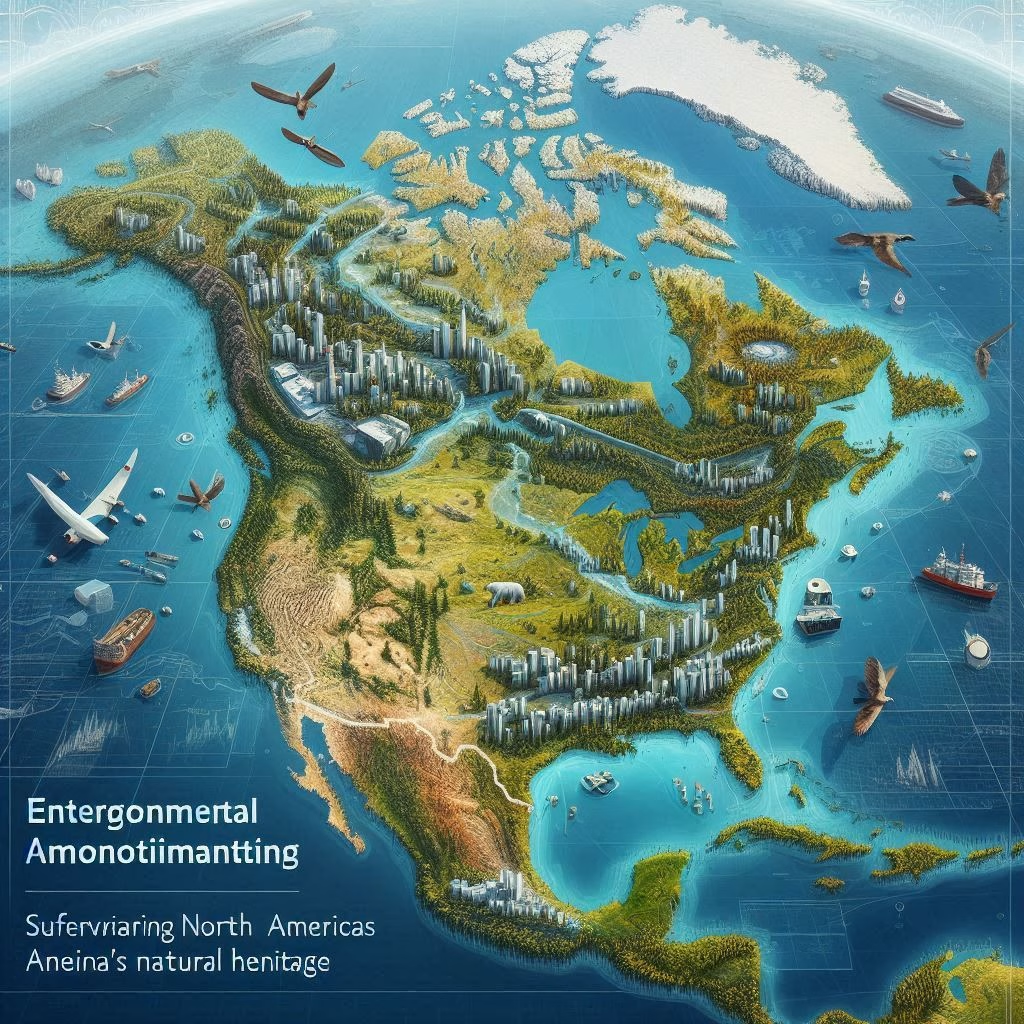
In an age of unprecedented environmental change, Geographic Information Systems (GIS) have become the keystone for monitoring, analyzing, and responding to ecological threats across the US and Canada. From tracking algal blooms in the Great Lakes to mapping wildfire impacts in British Columbia, GIS transforms scattered data points into actionable intelligence. This post explores how GIS empowers scientists, policymakers, and communities to protect air, water, land, and biodiversity—and how you can join the movement toward smarter, data-driven conservation.
In an era of accelerating ecological change, GIS for Environmental Monitoring offers a powerful lens to safeguard North America’s natural heritage. By fusing satellite imagery, IoT sensor feeds, and field surveys into dynamic spatial dashboards, this approach reveals pollution hotspots, tracks habitat shifts, and models climate-driven impacts across the US and Canada. Environmental scientists, policymakers, and community advocates can pinpoint emerging threats—from algal blooms in the Great Lakes to coastal erosion in Nova Scotia—and deploy targeted interventions with unprecedented precision. Whether you’re monitoring air quality in Vancouver or mapping wildfire risk in California, GIS provides the real-time insights needed to protect ecosystems and drive data-informed conservation strategies.

Why GIS Is Critical for Environmental Monitoring
Environmental challenges don’t respect political boundaries. Pollution plumes drift across states and provinces; invasive species spread along connected habitats; climate-driven shifts reshape ecosystems continent-wide. GIS offers:
- Spatial integration of satellite imagery, sensor networks, and field surveys
- Dynamic mapping of pollution hotspots, habitat loss, and extreme events
- Predictive modeling that anticipates risks before disasters strike
- Collaborative platforms for stakeholders—from government agencies to citizen scientists
By visualizing trends over space and time, GIS enables rapid detection of emerging threats and guides targeted interventions.
Key Applications of GIS in Environmental Monitoring
Water Quality and Freshwater Ecosystems
• Mapping nutrient runoff and algal blooms in the Great Lakes using remote-sensing data
• Tracking temperature and dissolved-oxygen sensors in Pacific Northwest watersheds
Air Pollution and Public Health
• Interpolating air-quality measurements from sensor networks in Los Angeles and Toronto
• Modeling particulate matter dispersion during wildfire season to protect vulnerable communities
Forest Health and Wildfire Management
• Detecting bark-beetle infestations in Alberta forests through LiDAR and multispectral imagery
• Generating fire-risk maps in California by overlaying fuel loads, slope, and weather forecasts
Coastal Erosion and Sea-Level Rise
• Monitoring shoreline change along Nova Scotia’s coast with drone-based photogrammetry
• Predicting flood inundation zones in Gulf Coast communities using digital elevation models
Biodiversity and Invasive Species
• Mapping critical habitats for migratory birds in the Prairie Pothole Region
• Tracking the spread of emerald ash borer in Midwestern woodlands via field-collected waypoints
Behind the Scenes: Building an Environmental GIS Workflow
Data Acquisition
• Satellite platforms (Landsat, Sentinel) for regional monitoring
• IoT-enabled sensors for continuous air, water, or soil measurements
• Mobile apps and drones for high-resolution, site-specific surveys
Data Integration & Preprocessing
• Georeferencing and cleaning disparate datasets
• Normalizing units (e.g., pollutant concentrations, temperature readings)
• Automating ingestion pipelines with Python or R scripts
Spatial Analysis & Modeling
• Hot-spot detection using kernel density or cluster analysis
• Change detection via time-series imagery and machine-learning classifiers
• Risk prediction with geostatistical models and scenario simulations
Visualization & Alert Systems
• Interactive web maps powered by ArcGIS Online or Mapbox
• Real-time dashboards displaying live sensor feeds and early-warning alerts
• Story maps that combine narrative, multimedia, and spatial data for public outreach
North American Success Stories
- Great Lakes Harmful Algal Bloom Forecasting Researchers fuse satellite chlorophyll data with watershed models to predict bloom severity—enabling communities in Michigan and Ontario to issue swim advisories days in advance.
- Puget Sound Oil Spill Response GIS dashboards ingest AIS ship-tracking data and coastal current models to guide containment booms and cleanup teams after tanker incidents.
- Quebec’s Urban Heat Island Mitigation Planners overlay thermal-infrared satellite layers onto city green-cover maps to identify heat-vulnerable districts and prioritize tree-planting programs.
- Everglades Restoration Monitoring: USDA satellites and in-field vegetation surveys feed into GIS models tracking water-management impacts on sawgrass marshes and endangered wading bird habitats.
Getting Started: Tools and Resources
Open Data Portals
• USGS Earth Explorer
• Environment and Climate Change Canada’s Open Data
• NASA’s EarthData
GIS Software
• ArcGIS Pro with Spatial Analyst extensions
• QGIS with processing plugins (GRASS, SAGA)
• Google Earth Engine for cloud-based geospatial computation
Training & Communities
• Coursera and Esri MOOC courses on environmental GIS
• Local Meetups and GIS user groups in major cities
• Citizen-science platforms like iNaturalist and CoCoRaHS
Future Trends in Environmental GIS
- Edge Computing for In-Field Sensors: On-device processing of imagery and sensor data to trigger local alerts without cloud dependency.
- AI-Driven Change Detection: Deep-learning models that automatically flag subtle shifts in vegetation, water quality, or land use.
- Integration with Digital Twins: Virtual replicas of ecosystems that simulate restoration scenarios or disaster responses before implementation.
- Crowdsourced Monitoring Networks: Empowering residents to contribute geotagged photos, sound recordings, and wildlife sightings via mobile apps.
Conclusion: Charting a Path to Resilience
GIS for environmental monitoring bridges geo data and action, enabling communities from coast to coast to safeguard ecosystems and adapt to change. Whether you’re a researcher tracking pollutants, a policymaker crafting regulations, or a citizen scientist mapping local wetlands, GIS offers the spatial clarity needed for impactful stewardship.
Ready to dive deeper? Explore our series on hands-on GIS tutorials, remote-sensing case studies, and open-source tools—your journey toward smarter environmental monitoring starts here.


