

GIS in Precision Agriculture: Mapping the Future of Smart Farming
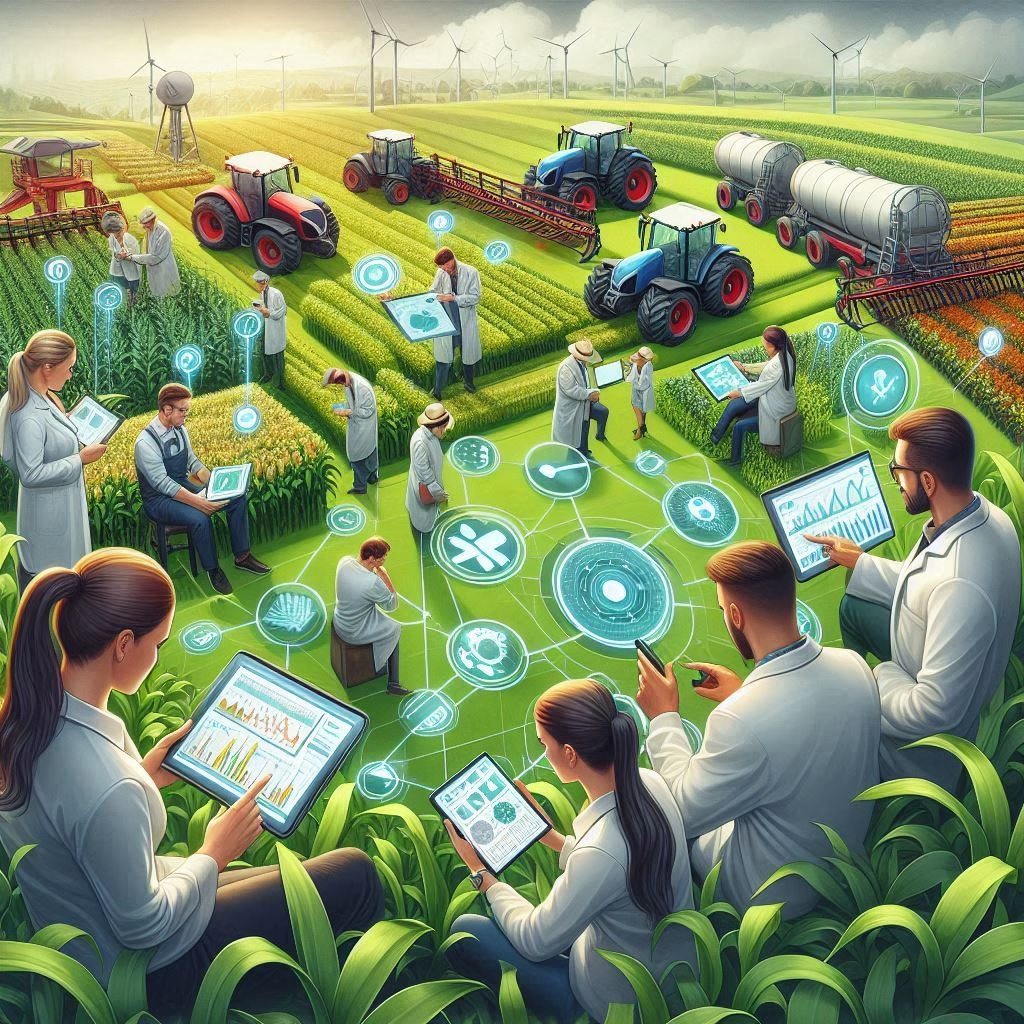
In the age of climate uncertainty, rising input costs, and growing demand for sustainable food systems, GIS in precision agriculture is no longer a luxury—it’s a necessity. Geographic Information Systems (GIS) empower farmers to make data-driven decisions that maximize yield, minimize waste, and protect the land for future generations. Whether you’re cultivating wheat in Alberta or managing orchards in California, GIS transforms your fields into intelligent ecosystems.
Let’s explore how this technology is reshaping agriculture across North America—and why now is the time to embrace it.

🌾 What Is GIS in Precision Agriculture?
At its core, GIS is a spatial analysis tool that captures, stores, and visualizes geographic data. In precision agriculture, it becomes the brain behind the operation—layering soil maps, crop health imagery, weather data, and topography into a unified dashboard.
This allows farmers to:
- Identify micro-variations in soil fertility, moisture, and pest pressure
- Apply inputs variably, reducing costs and environmental impact
- Monitor crop performance in real time using satellite and drone imagery
- Predict outcomes based on historical and seasonal data
It’s like having a bird’s-eye view of your farm, with the analytical power of a research lab.
🧠 Smart Farming in Action: GIS Use Cases
Here’s how GIS is being used by forward-thinking growers across the US and Canada:
1. Soil Zoning & Nutrient Management
Farmers use GIS to map soil types and nutrient levels across fields. By integrating GPS-tagged soil samples, they create fertility maps that guide variable-rate fertilization—ensuring each zone gets exactly what it needs.
2. Irrigation Optimization
GIS combines elevation data with moisture sensors to model water flow and retention. This helps farmers design efficient irrigation systems and avoid overwatering, especially in drought-prone regions like California or southern Alberta.
3. Pest & Disease Surveillance
By overlaying crop health indices (like NDVI) with weather patterns and historical outbreaks, GIS can predict pest hotspots before they emerge. This enables targeted pesticide application and reduces chemical use.
4. Yield Forecasting & Profit Mapping
GIS tracks yield data over time, revealing which zones consistently underperform. Farmers can adjust crop rotations, amend soil, or reallocate resources to boost profitability.
🚜 Real-World Impact: Case Studies
- Ontario Corn Growers reduced fertilizer use by 25% using GIS-based soil maps, saving thousands annually while improving yield consistency.
- Washington Apple Orchards uses drone imagery and GIS to monitor tree health, detect irrigation leaks, and plan harvest logistics.
- Prairie Wheat Farmers in Saskatchewan integrate GIS with weather models to optimize planting dates and reduce frost risk.
These aren’t just tech experiments—they’re proven strategies delivering measurable results.
🛠️ Getting Started: Tools & Resources
You don’t need a PhD or a six-figure budget to begin. Here’s a practical starter kit:
| Tool | Purpose | Cost |
|---|---|---|
| QGIS | Open-source GIS software | Free |
| ArcGIS Pro | Advanced spatial analysis | Paid |
| Ag Leader SMS | Farm-specific GIS tools | Varies |
| USDA NAIP Imagery | High-res aerial maps | Free |
| Sentinel Hub | Satellite crop monitoring | Free/Paid |
Pair these with GPS-enabled equipment and local extension support, and you’re ready to launch your precision farming journey.
🌱 Why It Matters Now
With climate volatility increasing and margins tightening, GIS offers a way to farm smarter—not harder. It’s a bridge between tradition and innovation, helping growers honor the land while embracing the future.
And for North American farmers, the timing couldn’t be better. Government programs, ag-tech startups, and cooperative networks are making GIS more accessible than ever.
🔍 Final Thoughts: From Maps to Mastery
GIS in precision agriculture isn’t just about maps—it’s about mastery. Mastery of your land, your inputs, your outcomes. It’s about turning data into decisions and decisions into impact.
So whether you’re a seasoned grower or just starting, now’s the time to explore how GIS can elevate your operation. Dive deeper into remote sensing, edge computing, and AI-enhanced analytics—and discover the tools that will define the next generation of agriculture.


