

Geospatial Analytics for Urban Planning: Navigating Tomorrow’s Cities Today
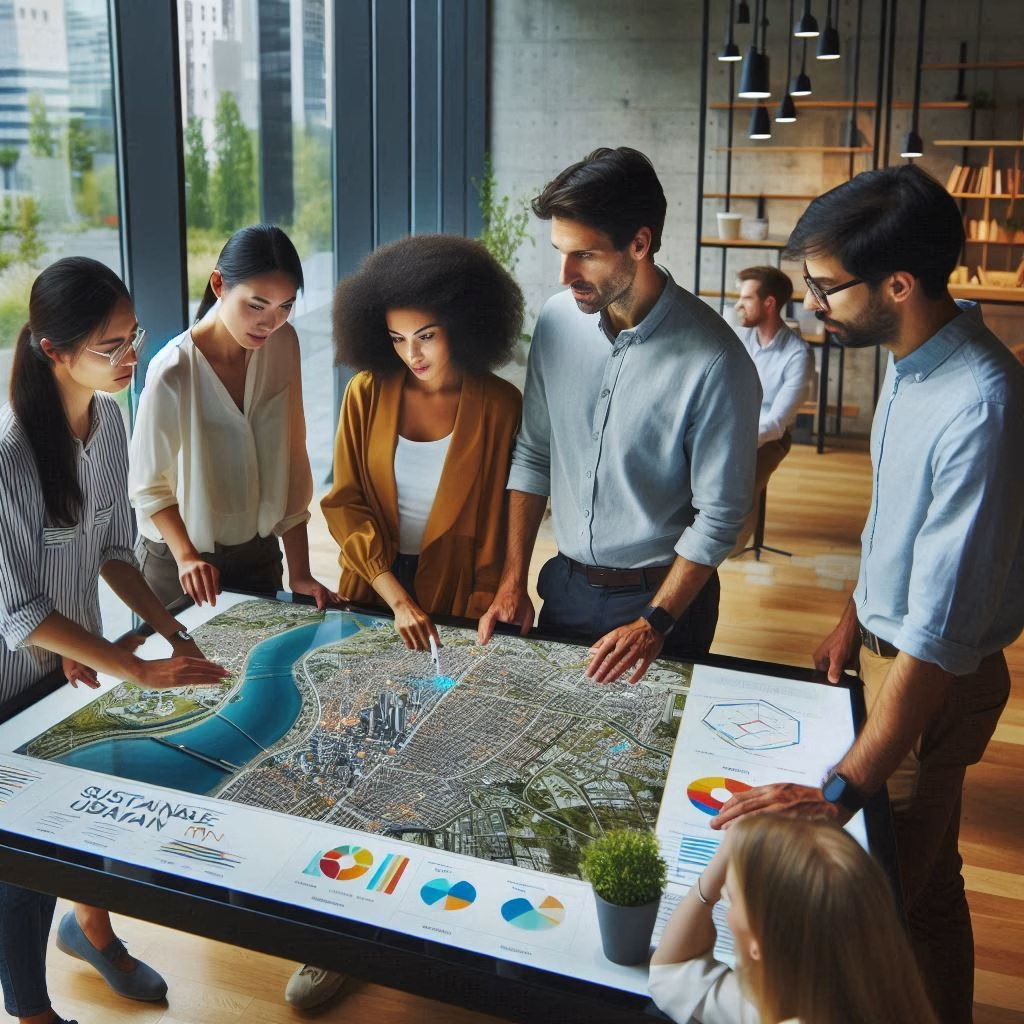
As North America’s cities swell—with Vancouver’s skyline reaching higher, Chicago’s neighborhoods densifying, and Toronto’s suburbs extending—urban planners face a new frontier of complexity. Traffic patterns shift by the hour, green spaces vanish under development, and climate risks loom larger than ever. Geospatial analytics for urban planning is the breakthrough that turns sprawling GEO data into actionable insights, empowering US and Canadian communities to build smarter, greener, and more resilient cities.

What Is Geospatial Analytics?
Geospatial analytics combines location-based data—satellite imagery, sensor feeds, cadastral parcels—with advanced analytics techniques like machine learning, spatial statistics, and predictive modeling. Unlike static maps that simply display information, geospatial analytics uncovers patterns, forecasts trends, and pinpoints opportunities. It transforms raw coordinates into rich narratives about how people move, how land is used, and how environments evolve.
Why It Matters for US and Canadian Cities
- Data-Driven Zoning and Land Use Planners use parcel-level analytics to model development scenarios, balancing affordable housing, commercial growth, and green corridors.
- Transportation Optimization Real-time traffic and transit data feed into route-simulation engines that recommend new bus lines, tweak signal timings, and reduce commute times.
- Climate Resilience Predictive flood mapping along the Mississippi and Fraser Rivers helps municipalities preemptively reinforce levees, design bioswales, and refine evacuation plans.
- Public Health and Equity Heat-island analytics in Phoenix and Montreal reveal neighborhoods at highest risk during heatwaves, guiding tree-planting campaigns and cooling-center placement.
- Infrastructure Management Asset-condition dashboards flag aging water mains in Detroit or bridge stress in Halifax before failures occur, optimizing maintenance budgets and public safety.
Real-World North American Success Stories
- Seattle’s Stormwater Strategy: By layering rainfall radar with topographic models, planners identified the most flood-prone blocks and installed green infrastructure—reducing combined-sewer overflows by 30%.
- Calgary’s Digital Twin of Downtown: A real-time 3D model ingests traffic counts, energy usage, and pedestrian flows. Developers simulate the impact of new towers on wind patterns and shadow casting before construction even begins.
- Boston’s Heat Mapping Initiative: High-resolution thermal satellite data pinpoint micro-hotspots. The city now prioritizes tree plantings and reflective pavements in the most vulnerable districts, cutting neighborhood temperatures by up to 5°F.
- Montreal’s Transit Equity Lens: Geospatial analytics revealed transit deserts in outer boroughs. Planners reallocated bus frequencies and launched microtransit shuttles, reducing average ride times by 12 minutes for underserved communities.
Getting Started: Building Your Geospatial Analytics Toolkit
Audit Your Data Assets
• Inventory public data from USGS, Canada Open Data, transit agencies, and utility providers
• Identify gaps—do you need ground sensors, drone surveys, or crowd-sourced mobile data?
Choose the Right Platform
• Commercial: ArcGIS Urban, Bentley BigData
• Open source: QGIS with GeoAnalytics plugins, Google Earth Engine
Upskill Your Team
• Offer workshops on spatial statistics, Python geoprocessing, and machine-learning integration
• Foster collaboration between planners, data scientists, and IT specialists
Pilot a Focused Project
• Tackle a high-value use case—like optimizing traffic flow along a key corridor or mapping tree-canopy coverage
• Measure outcomes, refine your models, and document lessons learned
Scale and Share Insights
• Embed dashboards into council workflows
• Publish interactive web maps for public engagement and transparency
Future Trends in Geospatial Analytics for Urban Planning
- AI-Driven Scenario Modeling: Generative models that propose optimized land-use plans with minimal carbon footprint.
- Real-Time City Dashboards: Integrations with IoT networks to monitor noise, air quality, and foot traffic as live city metrics.
- Augmented Reality Planning: Field crews and stakeholders overlay proposed developments onto the physical world via AR headsets—making intangible plans tangible.
- Citizen-Powered Geodata: Mobile apps let residents report potholes, share air-quality readings, or map sidewalk accessibility, fueling hyperlocal analytics.
Conclusion: Charting the Course for Next-Gen Cities
Geospatial analytics for urban planning isn’t a niche tool—it’s the compass for 21st-century citybuilding. For planners, policymakers, and engaged citizens across the US and Canada, it offers the clarity to balance growth with sustainability, equity with efficiency, and innovation with resilience.
Ready to dig deeper? Explore our upcoming deep-dive tutorials on predictive flood modeling, transit equity analysis, and building your first urban digital twin. Your city’s smarter future starts when you map it with intelligence—let’s begin today.


