

🌍 Open Geospatial Data: Mapping a Smarter, More Connected World
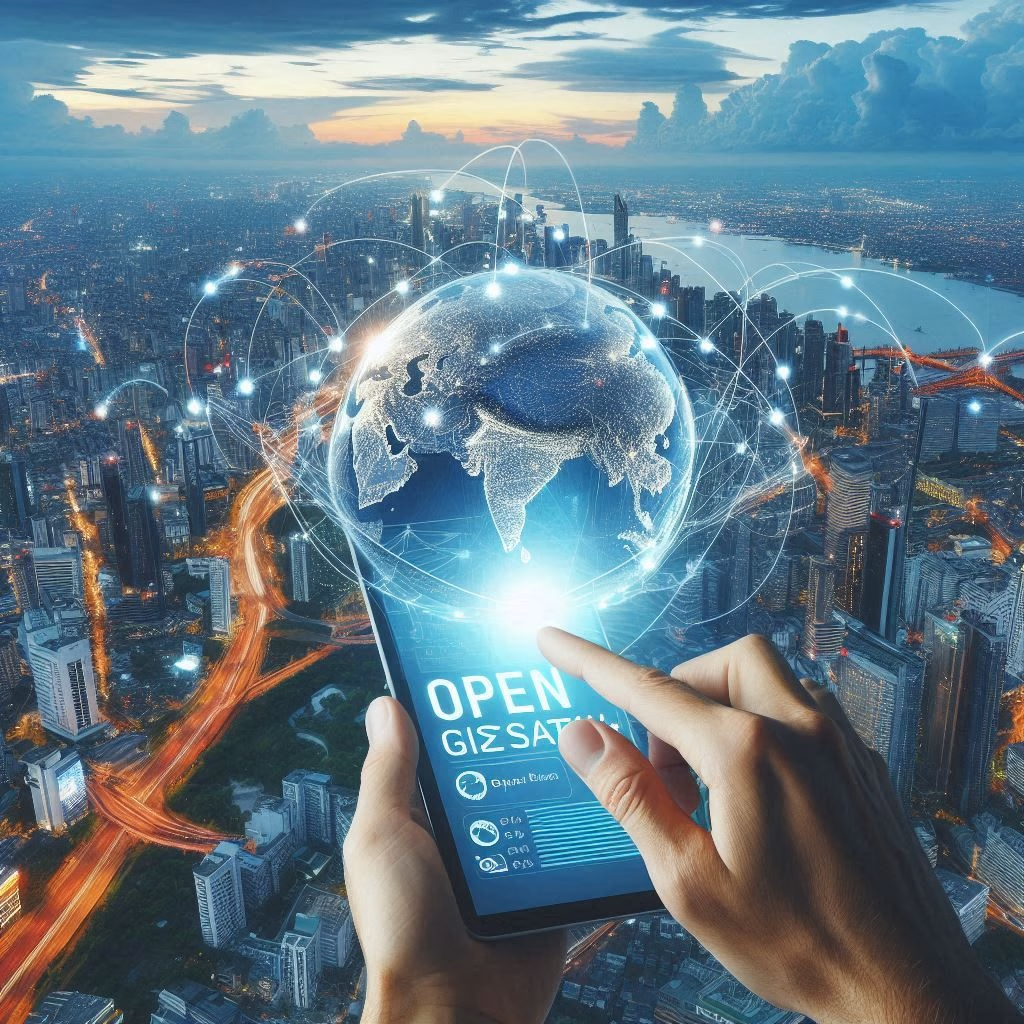
In an era where data drives decisions, open geospatial data is quietly revolutionizing how we understand, plan, and protect our world. From climate resilience in Nova Scotia to smart city planning in Seattle, this freely accessible location-based data is empowering communities, researchers, and innovators across North America.
Whether you’re a GIS analyst, urban gardener, tech entrepreneur, or wellness advocate, open geospatial data offers a treasure trove of insights waiting to be explored. Let’s dive into what it is, why it matters, and how you can harness its power to elevate your work—and your worldview.

🧭 What Is Open Geospatial Data?
Open geospatial data refers to location-based datasets—maps, satellite imagery, elevation models, land use records, and more—that are freely available to the public. These datasets are typically provided by government agencies, research institutions, and collaborative platforms, and they’re designed to be:
- Accessible: No paywalls or proprietary restrictions
- Interoperable: Compatible with common GIS tools and formats
- Reusable: Licensed for modification and redistribution
Think of it as the digital DNA of our planet—capturing everything from soil composition in Saskatchewan to traffic patterns in San Francisco.
🛰️ Why It Matters: Real-World Impact
1. Disaster Preparedness & Climate Resilience
Open geospatial data helps communities model flood zones, track wildfires, and plan evacuation routes. In Canada, platforms like these provide flood mapping tools and hydrographic networks to support emergency response and climate adaptation.
2. Urban Planning & Smart Cities
City planners use open data to design bike lanes, optimize public transit, and monitor green space distribution. In the US, initiatives like OpenStreetMap and the USGS National Map offer foundational data for infrastructure development.
3. Agriculture & Food Security
Farmers and agronomists analyze soil moisture, crop health, and land cover using satellite-derived open datasets. This supports precision agriculture and sustainable land management across North America.
4. Environmental Stewardship
Researchers track biodiversity, deforestation, and water quality using open geospatial layers. Canada’s GeoBase initiative offers foundational data on land, water, and infrastructure to support conservation efforts.
5. Indigenous Mapping & Cultural Preservation
Open geospatial platforms are increasingly integrating Indigenous place names and land knowledge. Canada’s Indigenous Geographical Names Dataset includes over 20,000 official names rooted in First Nations, Inuit, and Métis worldviews.
🛠️ Where to Find Open Geospatial Data
| Platform | Region | Key Features |
|---|---|---|
| Canada | 90,000+ datasets, flood mapping, GeoAI, Indigenous data | |
| Canada | Elevation data, satellite imagery, and hydrographic networks | |
| USA | Satellite imagery, land cover, and topography | |
| Global | Crowd-sourced maps, editable and free | |
| Global | Remote sensing data, climate models |
💡 How to Use It: Practical Tips for Beginners and Experts
- Start with a Question: What do you want to know or solve? Whether it’s mapping urban heat islands or tracking pollinator habitats, clarity is key.
- Choose the Right Tools: Use GIS software like QGIS (free and open-source) or ArcGIS Pro for advanced analysis. Google Earth Engine is great for cloud-based remote sensing.
- Layer Your Insights: Combine datasets—e.g., elevation + land use + climate zones—to uncover patterns and correlations.
- Visualize & Share: Turn raw data into compelling maps, dashboards, or story maps. Use platforms like Mapbox or Leaflet for web-based visualization.
- Stay Ethical & Inclusive: Respect data sovereignty, especially when working with Indigenous or community-contributed datasets. Always cite your sources and honor licensing terms.
🔮 The Future of Open Geospatial Data
- GeoAI Integration: Artificial intelligence is being used to automate feature detection and predictive modeling from open datasets.
- Citizen Science & Crowdsourcing: Platforms like OpenStreetMap thrive on public contributions, democratizing data creation.
- Climate-Driven Innovation: Open data is central to modeling carbon emissions, tracking glacier retreat, and guiding climate policy.
- Interdisciplinary Fusion: Expect more blending of geospatial data with health, economics, and social justice analytics.
✨ Final Thoughts: Mapping with Purpose
Open geospatial data isn’t just about maps—it’s about meaning. It’s about empowering people to make informed decisions, tell richer stories, and build more resilient communities. Whether you’re designing a pollinator-friendly garden, launching a tech startup, or writing a blog post that inspires change, open geospatial data is your ally.
So go ahead—download a dataset, explore a new map layer, or build a visualization that sparks curiosity. The world is waiting to be mapped, and you’ve got the tools to do it.
Stay tuned for upcoming posts on using open data for wellness mapping, herbal foraging zones, and smart garden planning across North America.


