

Real-Time GIS Data: Powering Instant Decisions
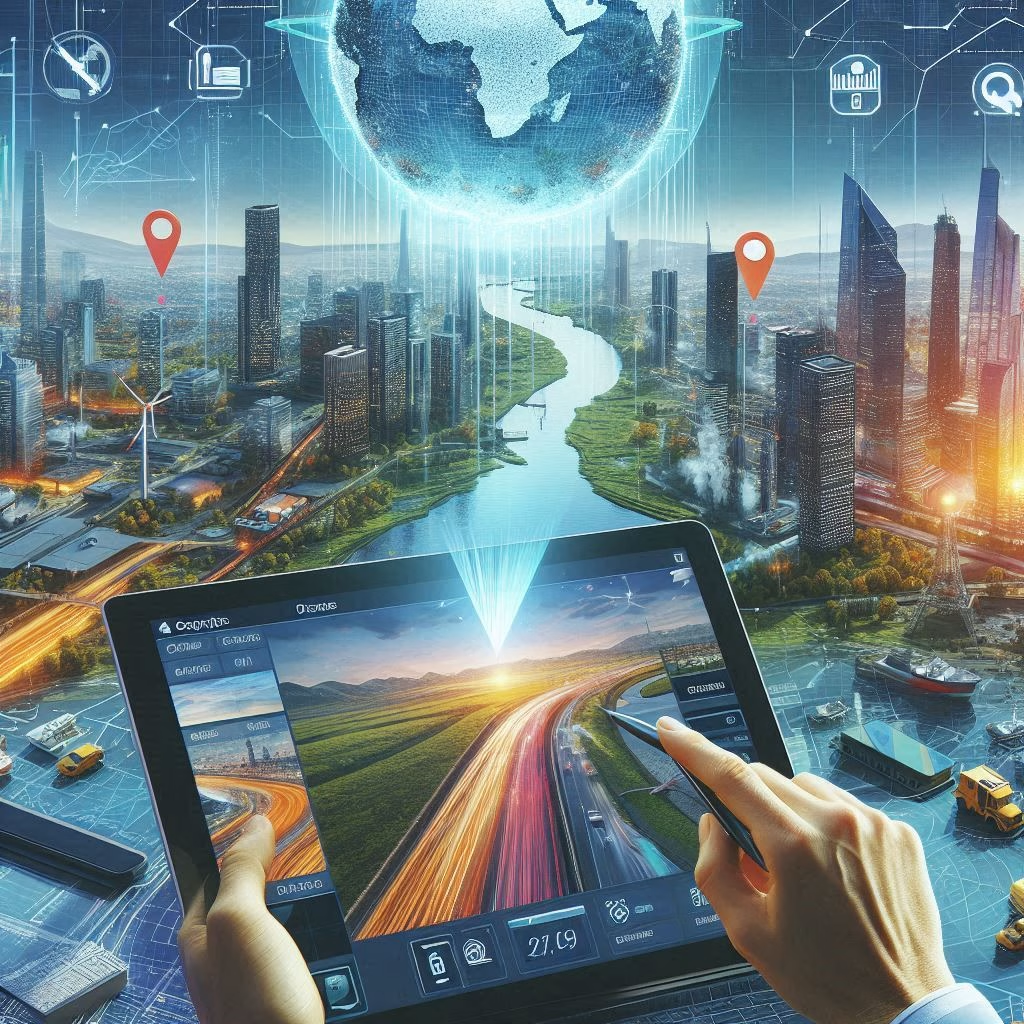
In a world where seconds matter—whether you’re rerouting emergency responders in Toronto, tracking wildfire spread in California, or managing fleet logistics in Chicago—real-time GIS data is the game-changer. It transforms static maps into dynamic decision engines, fusing location intelligence with live data streams to deliver instant insights. For professionals across industries in the US and Canada, this isn’t just a technological upgrade—it’s a strategic revolution.
Let’s explore how real-time GIS data is reshaping operations, enhancing safety, and unlocking new levels of responsiveness.

🧭 What Is Real-Time GIS Data?
Real-time GIS data refers to geospatial information that’s continuously updated from live sources—think GPS trackers, IoT sensors, weather stations, social media feeds, and satellite imagery. Unlike traditional GIS, which relies on periodic updates, real-time GIS enables:
- Instant visualization of changing conditions
- Automated alerts and event detection
- Seamless integration with operational systems
- Predictive analytics based on live inputs
It’s the difference between seeing what happened yesterday and knowing what’s happening right now.
🚨 Real-Time GIS in Action: North American Use Cases
1. Emergency Response & Public Safety
Cities like Vancouver and New York use real-time GIS to monitor 911 calls, dispatch vehicles, and track incidents as they unfold. Integrated feeds from traffic cameras, weather alerts, and mobile units allow responders to adjust routes and resources on the fly.
2. Environmental Monitoring
In wildfire-prone regions like Alberta and California, GIS platforms ingest satellite thermal data, wind speed, and vegetation indices to model fire spread in real time. This guides evacuation planning and firefighting strategies with pinpoint accuracy.
3. Smart Transportation & Logistics
Fleet managers in Toronto and Dallas use real-time GIS to track vehicle locations, optimize delivery routes, and monitor fuel usage. Live traffic data and weather overlays help avoid delays and reduce emissions.
4. Utility & Infrastructure Management
Electric utilities across Canada integrate SCADA sensor data into GIS dashboards to monitor grid performance, detect outages, and dispatch repair crews. Real-time mapping of power flow and fault locations speeds up restoration and improves reliability.
5. Public Health Surveillance
During disease outbreaks, health departments use GIS to track case locations, hospital capacity, and mobility patterns. Real-time dashboards help allocate resources and communicate risks to the public.
🔧 Tools & Technologies Behind Real-Time GIS
- ArcGIS Real-Time Analytics – Supports streaming data from sensors, vehicles, and weather systems for instant mapping and alerting
- Mapbox & Google Maps APIs – Enable real-time location tracking and visualization for mobile apps and web platforms
- IoT Integration – Devices like air-quality monitors, water-level sensors, and GPS trackers feed data directly into GIS layers
- AI & Machine Learning – Enhance real-time GIS with predictive modeling and anomaly detection
These platforms allow users to build dashboards, automate workflows, and trigger alerts based on spatial events.
🛠️ How to Get Started with Real-Time GIS
- Identify Your Data Sources: What live data do you already collect—vehicle GPS, weather feeds, sensor networks? Make a list.
- Choose a Scalable GIS Platform: Look for tools that support real-time ingestion, such as ArcGIS Velocity, QGIS with plugins, or cloud-based solutions like AWS Location Services.
- Design Your Dashboard: Build a map interface that displays key metrics, alerts, and trends. Use filters and layers to customize views for different teams.
- Automate Alerts & Actions: Set up geofences, thresholds, and triggers that notify users or launch workflows when certain conditions are met.
- Train Your Team: Ensure staff understand how to interpret real-time data and respond effectively. Offer training on spatial analytics and dashboard tools.
🔮 Future Trends in Real-Time GIS
- Digital Twins: Real-time GIS will power virtual replicas of cities, infrastructure, and ecosystems for simulation and planning.
- Edge Computing: Processing data at the source (e.g., on a drone or sensor) will reduce latency and improve responsiveness.
- Crowdsourced Geospatial Intelligence: Citizens will contribute live data via mobile apps, enhancing situational awareness.
- AI-Driven Event Detection: Machine learning will flag anomalies—like sudden traffic jams or pollution spikes—without human input.
🌍 Why It Matters for US and Canadian Communities
From urban resilience to rural connectivity, real-time GIS data empowers decision-makers to act faster and smarter. It supports:
- Climate adaptation and disaster response
- Efficient public services and infrastructure
- Transparent governance and citizen engagement
- Competitive advantage in logistics and operations
Whether you’re managing a city, a supply chain, or a conservation zone, real-time GIS is your key to staying ahead.
📌 Final Thoughts: From Static Maps to Living Systems
Real-time GIS data turns geography into a living, breathing system—one that responds, learns, and evolves. For North American professionals, embracing this technology means unlocking a new era of spatial intelligence.
Ready to explore more? Stay tuned for our upcoming guides on building real-time dashboards, integrating IoT sensors, and using GIS for predictive analytics. Your next breakthrough might be just one data stream away.
Read More: Americaloc Pro GPS Tracker LLX Review


